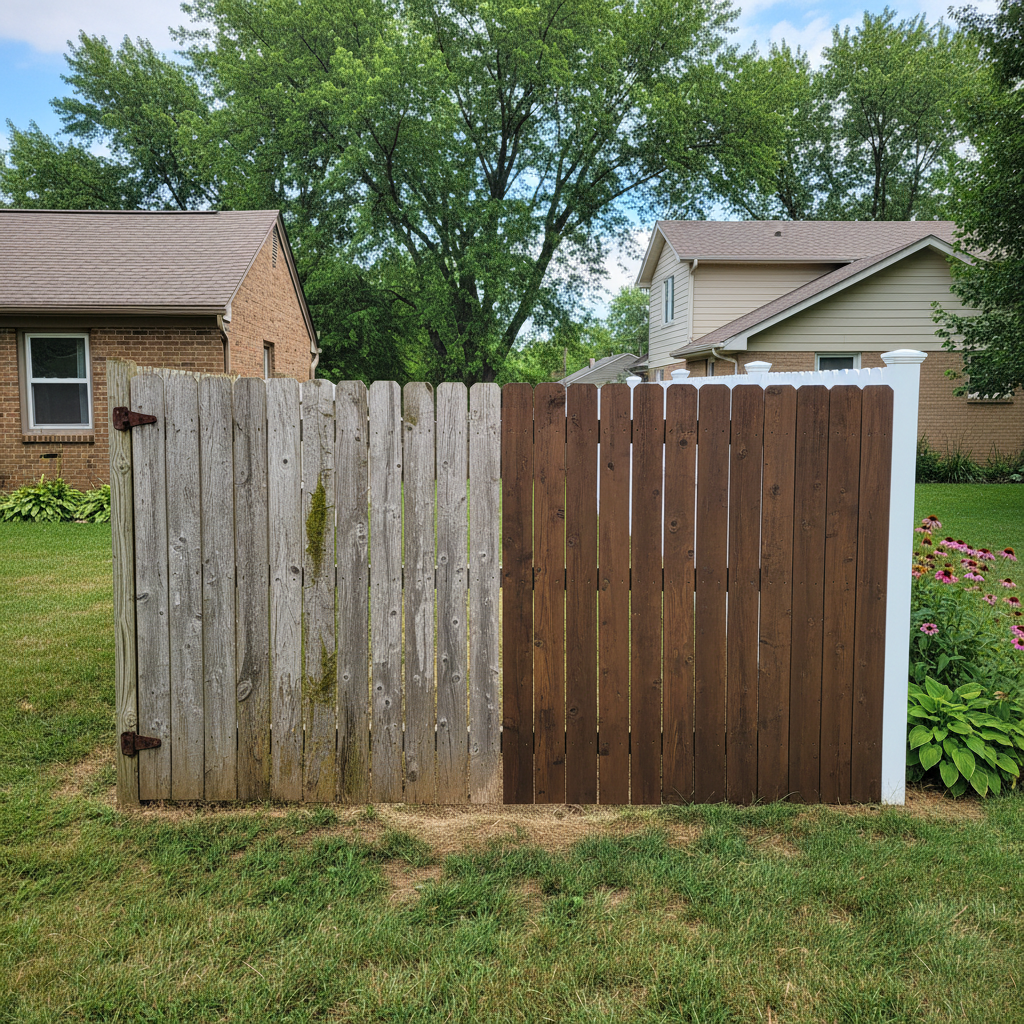
Alright, you've got a wood fence, maybe it's new, maybe it's seen a few Nebraska winters, and now you're looking at giving it some life. The big question usually comes down to this: stain or paint? It's not just a cosmetic choice; it's about protecting your investment and how much time you want to spend maintaining it down the road. I've seen countless fences around Fremont, from the older homes near downtown to the newer developments out by Highway 30, and I can tell you, there's a right answer for most situations.
Understanding Fence Stain
Let's talk about stain first. When you stain a fence, you're not just slapping color on top; you're letting that color soak into the wood fibers. Think of it like sunscreen for your fence. It penetrates, protecting the wood from UV rays, moisture, and rot, all while letting the natural grain of the wood show through. That's a big deal for a lot of folks who love the look of real wood.
There are a few types of stains:
- Transparent or Semi-Transparent: These are like a light tint. They offer good UV protection and really let the wood grain shine. You'll get some color, but the natural beauty of the wood is still the star.
- Semi-Solid: These have more pigment, so they cover more of the wood grain but still allow some of it to peek through. Better for older, slightly weathered wood that might have some minor imperfections.
- Solid Stains: These are almost like a thin paint. They cover the wood completely, hiding the grain, but they still penetrate the wood more than paint does. They offer excellent protection and can last a good while.
Durability-wise, a good quality stain, especially a semi-transparent or solid one, can last anywhere from 2 to 5 years, sometimes even longer with proper prep and application. The big advantage here is maintenance. When it's time to re-stain, you usually just clean the fence thoroughly and apply another coat. No scraping, no sanding down to bare wood unless it's really peeling or damaged. That's a huge time saver.
Understanding Fence Paint
Now, paint. Paint sits on top of the wood. It forms a protective layer, a barrier against the elements. It's like putting a coat of armor on your fence. You get a completely opaque finish, meaning no wood grain shows through. If you want a specific, vibrant color, or you want to match your house trim exactly, paint gives you that flexibility.
The protection paint offers is generally very good against moisture and UV, as long as that paint film stays intact. A well-applied paint job can last 5 to 10 years, sometimes even longer. That sounds great, right?
Here's the catch with paint, especially in a place like Fremont where we get those wild temperature swings and sometimes brutal humidity: when paint fails, it fails. It starts to chip, peel, and crack. And once it starts, it looks rough. When it's time to repaint, you can't just slap another coat on. You've got to scrape off all the loose, peeling paint, sand it down, prime it, and then paint it. It's a much more labor-intensive process. If you don't do that prep work right, the new paint will just peel right off with the old stuff, and you'll be back to square one in no time.
Cost Comparison
Upfront, the cost of materials for stain and paint can be pretty similar, depending on the quality you choose. Where the cost really differs is in the labor, especially for future maintenance. A re-stain is almost always cheaper than a repaint because of the significantly less prep work involved. If you're doing it yourself, you'll feel that difference in your back and your free time.
Appearance and Maintenance
This is where personal preference really comes in. Do you love the natural look of wood? Stain is your friend. Want a crisp, uniform color? Paint delivers. But remember, that crisp look comes with a higher maintenance burden down the line, especially in our climate. The freeze-thaw cycles we get here in Fremont, with the ground expanding and contracting, can really put stress on a fence, and that stress translates to paint cracking and peeling faster than in more temperate zones. I've seen fences in the older parts of town, especially those with original cedar or redwood, just look fantastic with a good stain that brings out their character.
My Recommendation for Fremont Homeowners
Alright, so what's the verdict for folks here in Fremont, NE? For most wood fences, I'm going to lean towards stain, especially a good quality semi-transparent or semi-solid stain. Here's why:
- Durability in our climate: Stain penetrates and flexes with the wood better than paint, making it more resilient to our extreme temperature changes and humidity. Paint's surface film is more prone to cracking and peeling under these conditions.
- Easier Maintenance: This is huge. When it's time to refresh, cleaning and re-applying stain is a far simpler, less time-consuming job than the scraping, sanding, and priming required for repainting.
- Natural Beauty: It lets the wood look like wood. If you've got a nice cedar or treated pine fence, why hide that natural grain?
- Cost-Effective Long-Term: While initial costs might be similar, the reduced labor for future maintenance makes staining a more economical choice over the lifespan of your fence.
Now, there are exceptions. If your fence is already painted and you're happy with the color, you might just want to stick with paint, but be prepared for that extensive prep work when it's time for a refresh. Or maybe you've got a really old fence with a lot of imperfections you want to completely hide; solid stain or paint could be an option there. But for a new or well-maintained wood fence, stain is usually the smarter, less headache-inducing choice for your Fremont home.
Whatever you decide, proper preparation is key. A clean, dry surface is critical for either stain or paint to adhere properly and last. If you're not sure, or you want to talk through your specific fence and what Alpha Fencing Solutions can do for you, just give us a call. We're always happy to help you figure out the best way to protect your investment.